
22 Dec ,2025
Artificial intelligence (AI) is no longer just a futuristic concept—it’s rapidly becoming a core part of how businesses operate. From automating repetitive tasks to improving customer service and even helping with hiring decisions, AI offers exciting opportunities for companies of all sizes. But as AI technology grows, so do the questions about how it should be regulated.
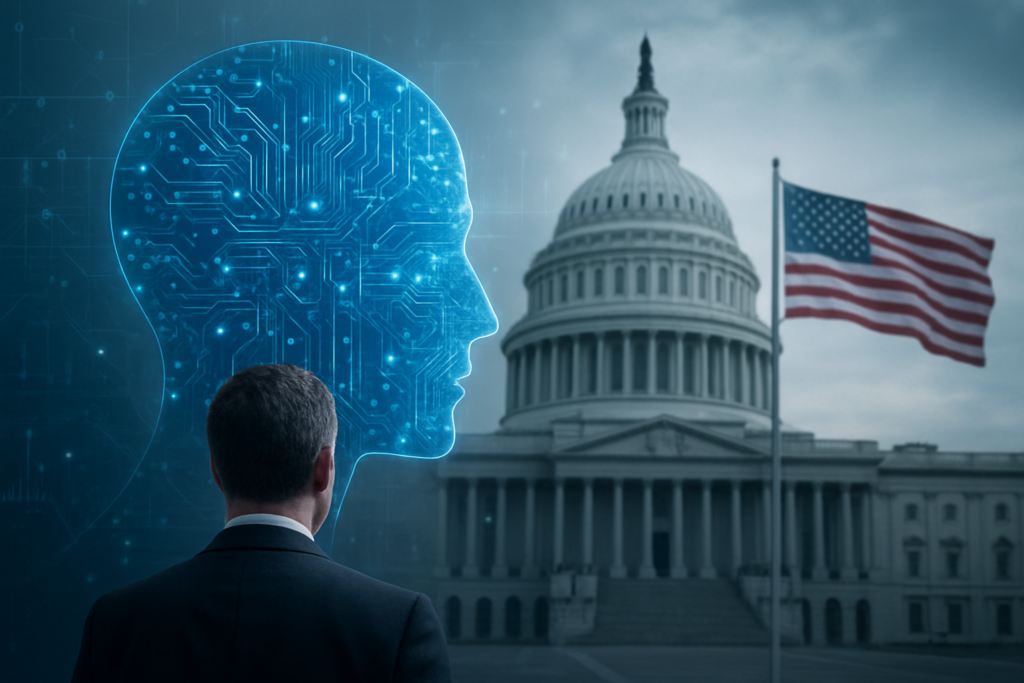
On December 11, 2025, President Donald Trump signed an executive order that could dramatically reshape the AI landscape in the United States. The order blocks state-level AI laws, aiming to create a single national standard. The move has sparked mixed reactions from lawmakers, business leaders, and innovators—and small businesses may feel the impact the most.
A “One Rulebook” Approach—or Legal Limbo?
The executive order directs federal agencies to challenge state AI regulations, arguing that a patchwork of local laws could slow innovation and make it difficult for companies to scale their AI projects. The administration frames this as an effort to simplify compliance and promote U.S. leadership in AI technology.
For companies that operate across multiple states, a unified federal standard could reduce complexity. Imagine trying to comply with one set of AI regulations in California, another in New York, and yet another in Texas. The executive order seeks to replace this with a single framework, which, in theory, could make it much easier to adopt AI technologies nationwide.
However, there’s a major caveat. Critics argue that an executive order cannot outright cancel state laws. This approach could face lengthy legal challenges, leaving companies unsure which rules actually apply. Small businesses—many of which don’t have large legal teams—could find themselves navigating a confusing and evolving regulatory landscape for months, or even years.
Why Small Businesses Should Pay Attention
For small and mid-sized companies, the executive order presents both opportunities and challenges:
Potential Benefits
-
Simplified Compliance Across States
Without a patchwork of different state laws, small businesses could adopt AI technologies more quickly and consistently, saving time and resources. -
Lower Administrative Burden
Fewer regulations to track can free small firms to focus on growth, innovation, and improving customer experiences rather than compliance paperwork. -
Nationwide Scalability
For companies planning to expand into multiple states, a single federal standard makes it easier to implement AI tools without worrying about varying state requirements.
Potential Challenges
-
Regulatory Uncertainty
The executive order does not immediately create comprehensive federal AI rules. Until courts decide whether state laws can be blocked, companies may be caught in a gray area. -
Limited Resources for Small Firms
Large tech companies can afford legal teams to navigate uncertainty, but smaller businesses may struggle, potentially slowing AI adoption. -
Risk of Gaps in Consumer and Worker Protections
States have started regulating AI in areas like hiring, workplace monitoring, and consumer privacy. If state laws are blocked before federal rules are finalized, protections in these areas could temporarily disappear.
The Industry and Political Divide
Reactions to the executive order have been split. Many tech executives and industry groups support a unified federal standard, arguing that it will encourage innovation and reduce compliance complexity.
On the other hand, state leaders, particularly in California, argue that local regulations are essential to protect residents and workers. They warn that a federal “one-size-fits-all” approach may not account for local needs. Even some Republican officials have questioned whether the president has the legal authority to preempt state laws via executive order, highlighting potential constitutional limits.
This divide sets the stage for a lengthy political and legal battle, one that could shape the future of AI regulation in the United States for years.
Practical Steps for Small Businesses
Even as lawmakers and courts sort out the future of AI regulation, small businesses can take proactive steps to stay ahead:
-
Stay Informed About State AI Laws
Some state regulations may still apply while legal challenges unfold, so it’s important to track developments in your state. -
Monitor Federal Guidance
Federal agencies like the FTC and the Commerce Department are expected to provide guidance on AI compliance. Keeping up with their updates will help businesses prepare for future regulations. -
Plan for Flexibility
Building flexibility into your AI strategy can help your business adapt quickly to changing rules, whether at the state or federal level. -
Document AI Use Carefully
Keep clear records of how AI tools are being used in hiring, automation, and customer service. Documentation can help demonstrate compliance if regulatory scrutiny arises.
Looking Ahead
The Trump executive order highlights a broader challenge in American governance: balancing innovation with accountability. Businesses want to leverage AI to grow and compete globally, but regulators must ensure that technology is used responsibly.
For small businesses, the coming months will be critical. Staying informed, planning strategically, and remaining adaptable will be essential for navigating the shifting landscape. While the legal outcomes are uncertain, one thing is clear: AI is here to stay, and how it is regulated will impact every business that uses it.
Key Takeaways
-
The executive order blocks state AI laws, aiming for a unified federal standard.
-
Small businesses could benefit from simplified compliance but face legal uncertainty.
-
State laws may still apply during court challenges, creating potential regulatory gray areas.
-
Staying informed, documenting AI use, and planning for flexibility are essential for small businesses.
AI promises powerful opportunities—but with regulation in flux, small businesses will need to be smart, agile, and prepared for change.