
Sep 11,2025
The Click, the Buzz, and the Ring
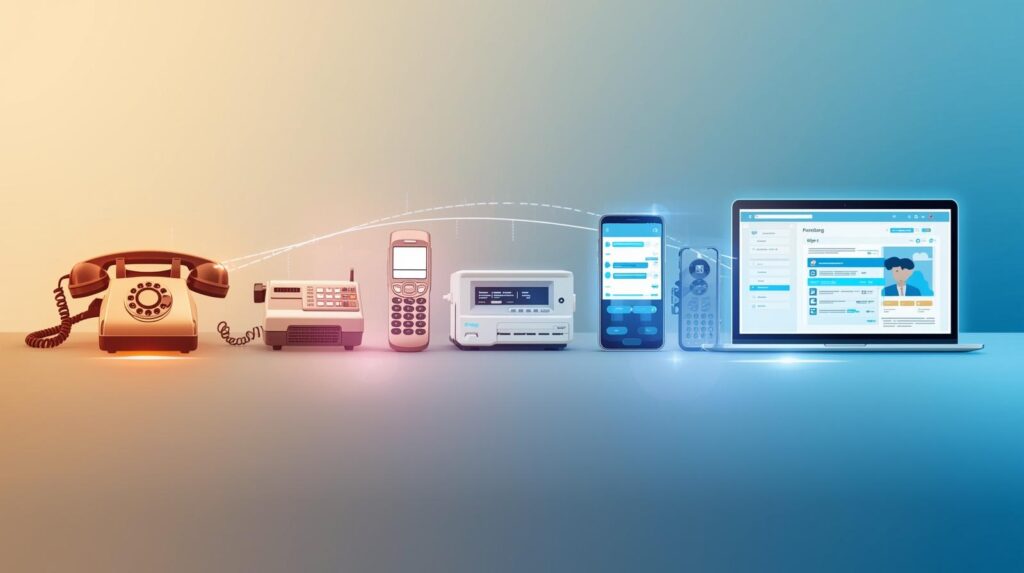
There was a time when making a call meant picking up a heavy receiver and waiting for a switchboard operator to connect you. Those early phone lines weren’t just about convenience—they were about awe. For the first time in history, voices could travel miles in real time.
The Rise of the Rotary
Fast forward to the rotary phone era. Families gathered around a single device in the hallway, waiting for their turn to call. Businesses installed multiple lines, each with its own cord and clunky hardware. Communication was expanding, but it was still tethered—both literally and figuratively—to the desk.
Touch-Tone to Dial-Up
Then came touch-tone dialing and the age of the internet. Suddenly, a dial-up tone wasn’t just for calls—it meant logging into the digital world. For many, the internet and telephony became intertwined: email during the day, late-night calls over copper wires, all carried by the same networks.
Enter Mobile and Wireless Freedom
The late 90s and early 2000s marked the shift to mobility. Phones no longer sat still; they traveled in pockets and purses. But while mobile freed the caller, businesses still struggled with scattered communication systems—landlines in offices, mobiles in the field, and costly long-distance bills.
The VoIP Revolution
Then came Voice over Internet Protocol (VoIP). No more expensive infrastructure, no more waiting for phone companies to add a line. With VoIP, voice became data—flexible, scalable, and borderless. Calls could happen anywhere there was an internet connection. Businesses discovered features like voicemail-to-email, call routing, and analytics—things a landline could never dream of.
Dial Smarter, Not Harder
Today, VoIP isn’t just a cheaper alternative—it’s the smarter evolution of communication. It integrates with CRMs, empowers remote teams, and keeps conversations secure. From switchboards to smartphones, the journey has always been about one thing: making human connection easier, clearer, and more accessible.
And as technology continues to evolve, one thing is certain—communication will keep moving forward. The only question is, how smart will your next call be?